


It has been a while since I last wrote a journal entry. Life has shifted into a new rhythm, and I find myself in an open season of waiting. It is a very different kind of waiting than the intense, structured anticipation I felt during the formal discernment process. There is more space to breathe now, and with that space comes a lot of time to reflect.
Lately, my mind keeps returning to the prophet Isaiah. We all know the famous moment when the Lord asks, “Whom shall I send? And who will go for us?” and Isaiah boldly replies, “Here am I. Send me!” (Isaiah 6:8).
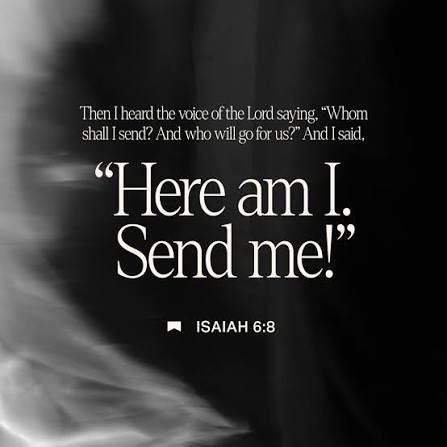
For a long time, I viewed that response through a specific lens. In our modern context, it is far too easy to treat “Here am I” as a sort of spiritual virtue signalling—a chest-thumping, pride-filled declaration of our own readiness and capability. It can feel like we are shouting, “Look at me, I am stepping up to do this!”
But the reality of answering God’s call is rarely that neat, and it certainly leaves no room for pride. This brings me to the conversation around Matthew 21 and the Parable of the Two Sons.
In the parable, a father asks his two sons to go and work in the vineyard. The second son immediately says, “I will, sir.” He says all the right things, perhaps to look good in the moment or to project a sense of instant obedience, but he never actually goes. His words are empty.
The first son, however, flatly refuses. He tells his father, “I will not.” But later, he changes his mind and goes to do the work.
When I look back on my own journey—particularly when I reflect on my 20-year detour—I know exactly which son I was. I was the boy who said no. I walked away, pursued my own plans, and genuinely thought that was the end of the conversation.
But the profound comfort in this parable, and in my own lived experience, is the realisation that God never lets go if He truly wants you. He doesn’t write you off after your initial refusal. He gave me the time to work through my reluctance, my fears, and my own pride. After two decades of saying no, He was still there, quietly waiting for my mind—and my heart—to change.
Saying “Here am I, send me” hasn’t been a quick, prideful boast for me. It has been a slow, humbling surrender after a very long and stubborn scenic route.
As I sit in this current season of open waiting, I am deeply grateful for a God who is patient enough to let us change our minds, and persistent enough to keep asking the question until we are finally stripped of our pride and ready to step into the vineyard.
