


When we talk about the Church of England, neurodiversity, and the often exhausting hurdles of the discernment process, it is incredibly easy to let cynicism take the wheel. If you are currently wading through the sheer volume of paperwork, struggling with the academic reading lists, or feeling like your background simply does not fit the traditional, polished mould of a minister, the institution can feel like an immovable, monolithic structure. It can feel like a system built entirely by, and exclusively for, neurotypical, highly academic minds with inherited cultural capital.
But occasionally, we have to look up from the grassroots struggle and acknowledge where the Church is actually getting things remarkably right.
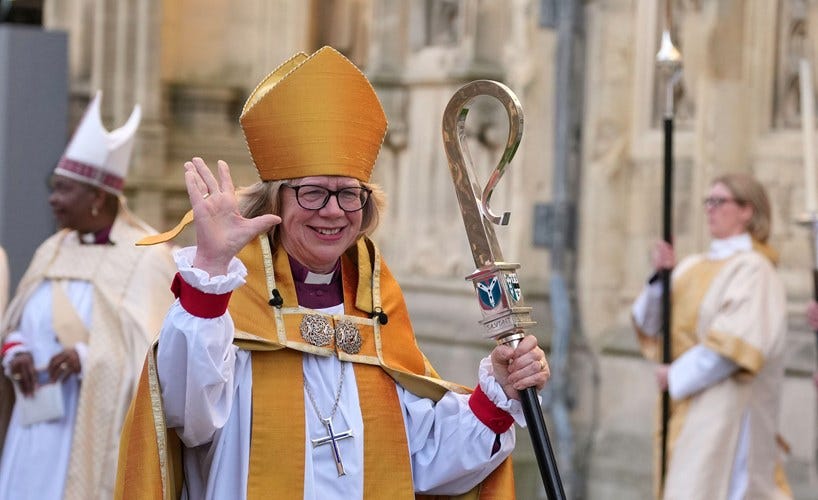
Take a moment to look at the very top of the Church. The Most Reverend Sarah Mullally was installed as the 106th Archbishop of Canterbury in March 2026, becoming the first woman to hold the office. She is the senior bishop of the Church of England, the spiritual head of the worldwide Anglican Communion, and she is openly dyslexic.
Her journey to Lambeth Palace did not follow the traditional, well-worn path that we so often assume is mandatory for senior leadership. She did not come through the elite public school system, nor did she spend her formative years steeped in the Oxford or Cambridge theological pipelines. She attended a comprehensive school in Surrey. She left school to train as a nurse, specialising in cancer care, and working her way up through the National Health Service to eventually become the Chief Nursing Officer for England at just 37 years old. She has often spoken about how that first vocation to nursing shaped her entirely, stating that compassion and healing remain at the heart of who she is.

And she did all of this while navigating the world with a dyslexic mind. She has spoken candidly about the practical realities of her neurodivergence, noting that she finds it difficult to read out biblical genealogies publicly, and she once penned a poignant letter to her younger self, advising that young girl not to let her dyslexia define her.
Having a dyslexic woman from a non-traditional, non-Oxbridge background holding the highest office in the Church is not just a nice piece of trivia. It is a real theological statement. It is living, breathing proof that the hierarchy of the Church can accommodate, elevate, and desperately needs neurodivergent minds and working-class roots. It demonstrates that the highest levels of Church leadership are not fundamentally allergic to people who process information differently.
Yet, this vital, highly visible representation at the top forces us to ask some deeply uncomfortable questions about what is happening at the bottom.

If the Archbishop of Canterbury can openly navigate her demanding, word-heavy, incredibly complex role with dyslexia, why are so many working-class and neurodivergent candidates still hitting brick walls at the very early stages of their calling? If the top of the tree can bear this kind of diverse fruit, why does the soil at the grassroots still feel so hostile to the seeds?